
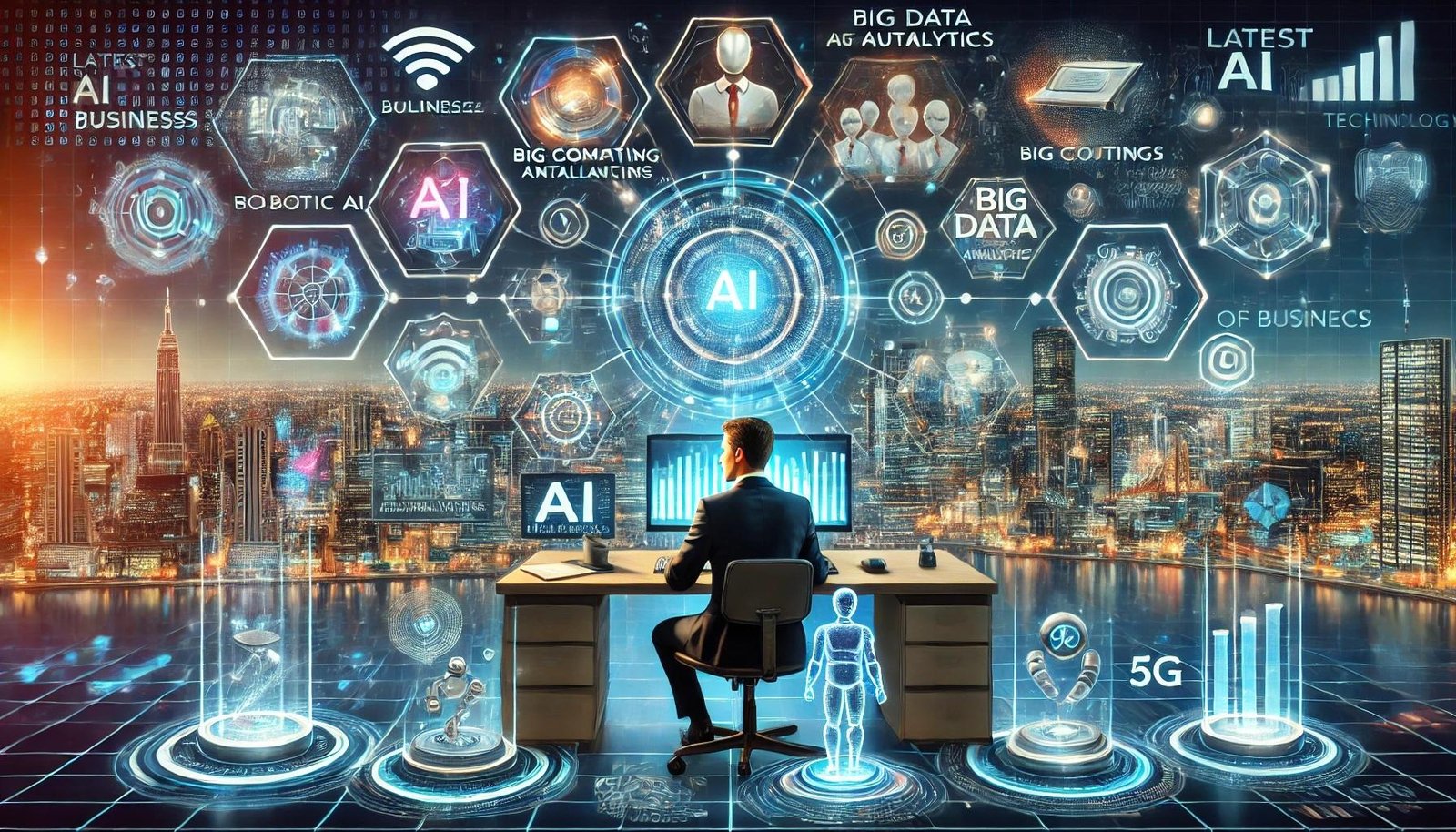
Artificial Intelligence (AI) has rapidly become one of the most influential technologies shaping the modern business world. What was once considered an emerging technology is now being used by companies of all sizes to automate processes, improve customer experiences, analyze data, and develop innovative products and services.
In 2026, businesses are no longer asking whether they should explore AI. Instead, the focus is shifting toward how they can use AI effectively, securely, and strategically to solve real business problems.
From intelligent chatbots and automated workflows to predictive analytics and AI-assisted software development, the possibilities are expanding every day.
What Is Artificial Intelligence in Business?
Artificial Intelligence refers to technologies that enable computers and software to perform tasks that traditionally require human intelligence. These tasks can include understanding language, recognizing patterns, analyzing information, generating content, making predictions, and assisting with decision-making.
For businesses, AI is particularly valuable because it can process large amounts of information quickly and identify patterns that may be difficult for humans to discover manually.
AI can be integrated into websites, mobile applications, customer service platforms, enterprise software, marketing systems, e-commerce platforms, and internal business operations.
1. Automating Repetitive Business Tasks
One of the biggest advantages of AI is automation.
Businesses spend significant amounts of time performing repetitive tasks such as data entry, document processing, scheduling, email classification, report generation, and responding to common customer questions.
AI-powered systems can automate many of these processes while reducing manual effort.
For example, an organization can use AI to automatically categorize incoming customer requests and direct them to the appropriate department. Similarly, AI tools can summarize documents, extract important information from files, and generate routine reports.
This allows employees to focus on more valuable activities such as strategy, creativity, problem-solving, and customer relationships.
2. Improving Customer Experience
Customer expectations are constantly increasing. People want quick responses, personalized recommendations, and convenient digital experiences.
AI is helping businesses meet these expectations through intelligent customer-support systems.
AI-powered chatbots can answer frequently asked questions, provide product information, help customers navigate websites, and assist with basic support requests at any time of the day.
AI can also analyze customer interactions to understand preferences and behavior. Businesses can then use these insights to create more personalized experiences.
For example, an e-commerce website can recommend products based on previous purchases, browsing behavior, or customer interests.
3. Making Better Data-Driven Decisions
Modern businesses generate enormous amounts of data every day.
Sales transactions, website traffic, customer interactions, marketing campaigns, inventory information, and operational data can all provide valuable insights. However, analyzing this information manually can be time-consuming.
AI can help businesses process and analyze large datasets much faster.
By identifying patterns and trends, AI-powered analytics can help companies understand:
- Which products are performing well
- What customers are interested in
- Where operational problems are occurring
- Which marketing campaigns are generating results
- How demand may change in the future
These insights can support better and faster business decisions.
4. AI-Powered Marketing
Marketing is another area where AI is having a significant impact.
Businesses can use AI to analyze customer behavior, identify target audiences, generate content ideas, personalize campaigns, and evaluate marketing performance.
AI can help marketers understand which types of content attract the most attention and which communication channels generate better engagement.
Generative AI can also assist with creating initial drafts for blog posts, social media content, advertisements, product descriptions, and email campaigns.
However, human creativity and review remain important. AI works best as a productivity tool that supports marketing teams rather than completely replacing them.
5. Transforming Software Development
AI is also changing the way software and websites are developed.
Developers can use AI-assisted tools to generate code suggestions, explain existing code, identify potential errors, create documentation, and assist with debugging.
This can help development teams reduce the time required for routine coding tasks and focus more on architecture, user experience, security, and business requirements.
For IT companies, AI-assisted development can improve productivity while helping teams deliver digital products more efficiently.
6. Improving Business Productivity
AI can become a valuable assistant for employees across different departments.
Employees can use AI tools for tasks such as:
- Research and information gathering
- Summarizing lengthy documents
- Preparing reports
- Creating presentations
- Generating ideas
- Analyzing data
- Writing and editing content
- Organizing information
- Automating repetitive workflows
When AI is integrated thoughtfully into everyday workflows, teams can save time and focus their attention on tasks that require human judgment and creativity.
7. AI in E-Commerce
The e-commerce industry is another major area being transformed by AI.
Online businesses can use AI to improve product recommendations, customer support, search functionality, inventory planning, and personalized shopping experiences.
For example, an online store can recommend products based on a customer’s previous activity. AI can also help businesses identify purchasing patterns and predict which products may experience increased demand.
This can create a more personalized shopping experience while helping businesses improve sales and operational efficiency.
8. Enhancing Cybersecurity
As businesses become increasingly digital, cybersecurity has become a critical priority.
AI can assist security teams by monitoring systems, identifying unusual patterns, detecting suspicious activities, and helping organizations respond to potential threats.
Instead of relying entirely on manual monitoring, AI-powered security systems can analyze large volumes of activity and identify anomalies more quickly.
However, AI itself must also be implemented securely. Businesses should establish appropriate access controls, data protection policies, and security practices when introducing AI into their operations.
9. The Importance of Responsible AI
While AI provides significant opportunities, businesses must also consider its risks and limitations.
AI systems can sometimes produce inaccurate information, make incorrect assumptions, or generate biased results. Sensitive business information should also be handled carefully when using AI-powered platforms.
Companies should therefore establish clear guidelines for AI usage.
Important considerations include:
- Protecting confidential business information
- Reviewing AI-generated results
- Maintaining data privacy
- Monitoring AI system performance
- Keeping humans involved in important decisions
- Selecting reliable AI technologies
Responsible implementation is essential for building trust and achieving long-term value from AI.
10. What Does the Future of AI Look Like?
AI technology is developing rapidly, and its role in business is expected to continue expanding.
Businesses will increasingly use AI not only as a standalone tool but as part of larger digital systems and workflows.
AI-powered applications may become more capable of understanding business processes, analyzing real-time information, assisting employees, and automating complex workflows.
The companies that benefit most will not necessarily be those that use the most AI. Instead, they will be the companies that identify meaningful business problems and use AI to solve them effectively.
How Businesses Can Start Their AI Journey
Companies interested in adopting AI should begin with their business objectives rather than simply choosing the latest AI technology.
A practical approach is to:
1. Identify repetitive processes
Find tasks that consume significant employee time and could potentially be automated.
2. Define clear objectives
Determine what the business wants to achieve, such as reducing costs, improving customer support, or increasing productivity.
3. Choose the right technology
Select AI tools and platforms based on actual business requirements.
4. Start with a focused project
Instead of attempting to transform the entire organization immediately, begin with one practical use case.
5. Measure the results
Track improvements in productivity, cost, customer satisfaction, or other relevant business metrics.
6. Scale gradually
Once an AI solution demonstrates measurable value, it can be expanded to other departments and processes.
Conclusion
Artificial Intelligence is changing the way businesses operate, communicate with customers, analyze information, and develop digital products.
From automating repetitive tasks to improving customer experiences and supporting smarter decisions, AI offers businesses numerous opportunities to become more efficient and competitive.
However, successful AI adoption is not simply about using the newest technology. It requires a clear strategy, reliable technology, strong data practices, security, and human oversight.
For businesses looking toward the future, AI can become a powerful part of their digital transformation strategy. The key is to start with real business challenges, implement AI thoughtfully, and continuously measure its impact.
Ready to explore how AI can improve your business?
Our technology team can help you identify opportunities, plan your digital strategy, and build scalable solutions designed around your business goals.